Design mockup. Straightedge Flatwork Co. is not a real company, and this page is not affiliated with any business.

StraightedgeFlatwork Co. (816) 555-0146
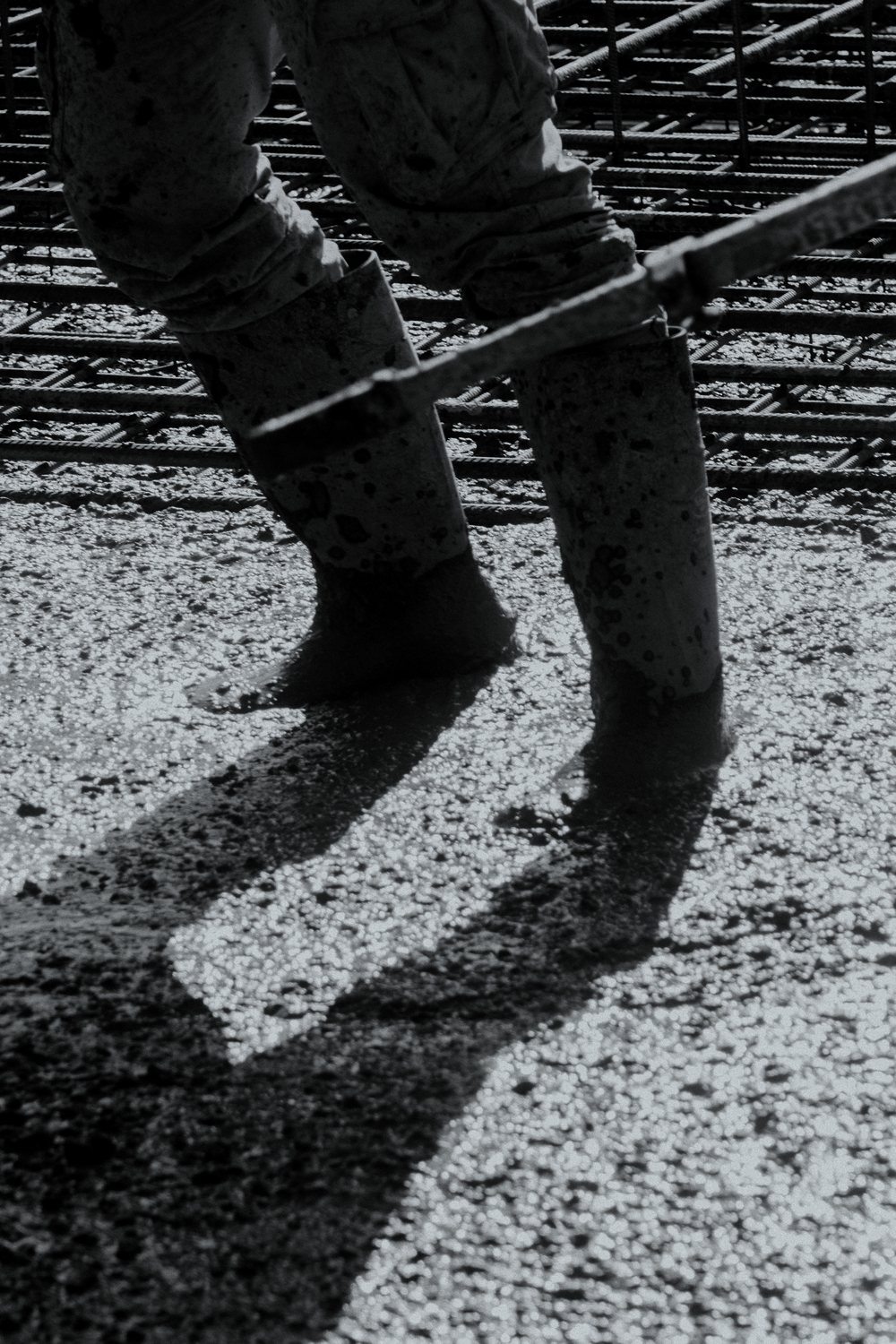
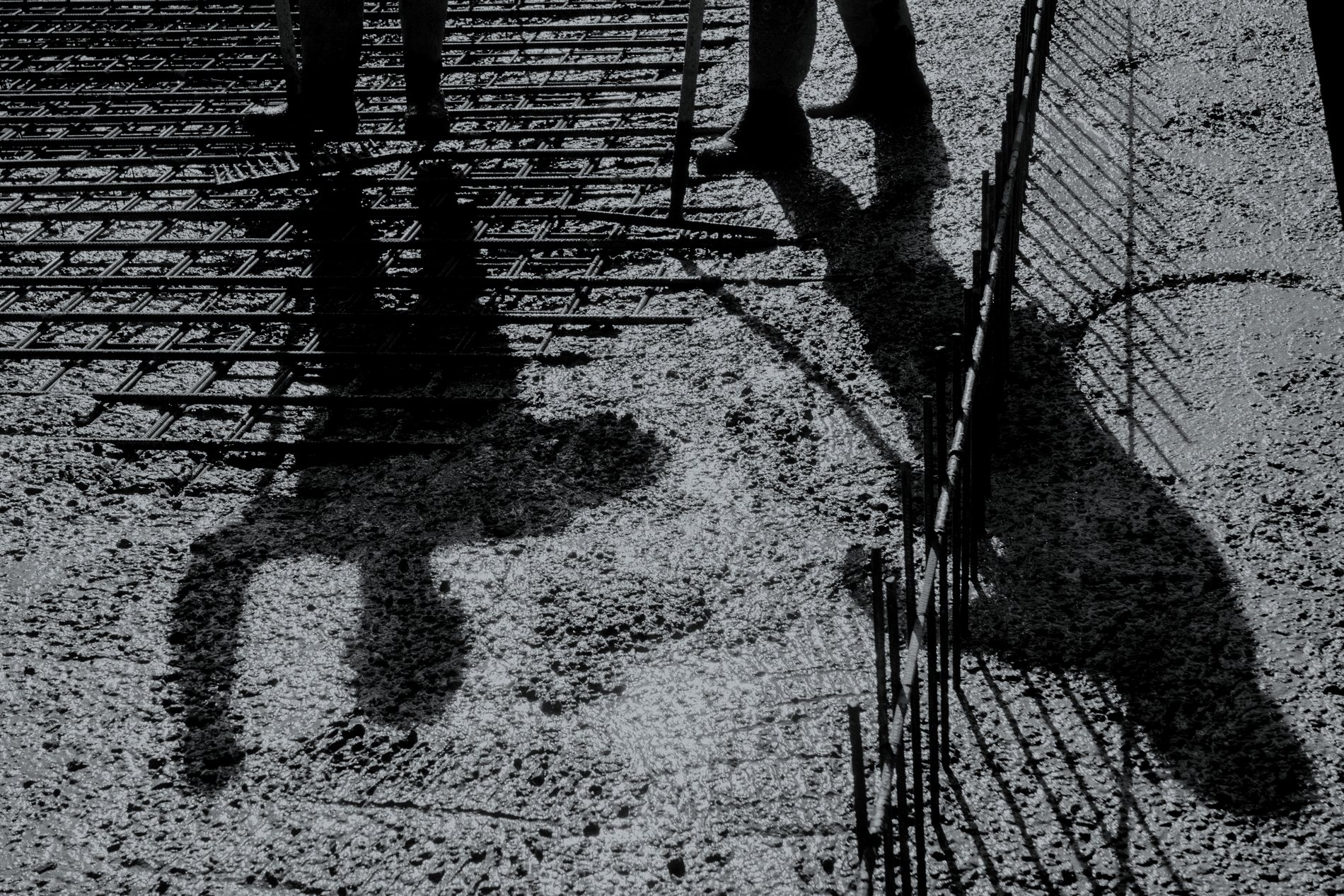
Fresh concrete being placed over a rebar mat, with the shadows of two workers and a rake falling across the wet surface.

Concrete flatwork, Kansas City Northland

Every slab cracks.
We decide where.

A driveway shrinks while it cures and it will pull itself apart somewhere. A sawn joint gives it a straight line to do that in. Below is one real drive, the six places it would have cracked, and what we cut instead.

Call (816) 555-0146

The plan

One drive, jointed before a truck is ordered.

Forty five feet long, sixteen feet wide, opening to a twenty four foot apron at the garage. Nothing drawn here is decorative.

Every dashed line is a saw cut, made the same day the concrete goes down and taken about a quarter of the way through the slab. The six numbered squares are where this particular drive would come apart if nobody drew them first.

Plan view of a jointed concrete driveway A drawing looking straight down at a driveway. The street and curb are at the left, the garage at the right. The drive runs forty five feet and is sixteen feet wide, widening for the last ten feet into a twenty four foot apron. One joint runs down the centre of the drive and three joints cross it at eight foot nine intervals. Two short diagonal joints leave the inside corners where the drive meets the wider apron. A hatched band marks a backfilled utility trench crossing the drive. Six numbered squares mark the crack origins described in the six sections below. Public street and curb Garage slab 45 ft 0 in 8 ft 9 in 16 ft 0 in 24 ft 0 in 01 02 03 04 05 06
  • Sawn control joint, cut the day of the pour
  • Isolation joint, full depth, set before the pour
  • Backfilled utility trench
  • Thickened edge
  1. 01 The inside corner at the apron
  2. 02 The backfilled trench
  3. 03 The middle of a wide pour
  4. 04 The street end
  5. 05 The downspout
  6. 06 The edge a tire drops off

Six places, and what goes in each one.

01

The inside corner at the apron.

Concrete pulls in from every edge while it dries. At an inside corner it is being pulled two directions at once, and the corner is the one point that cannot go both ways.

So it tears, out of the corner, at roughly forty five degrees, and it is the most reliable crack on a residential drive. Any place the slab changes width, steps around a stoop, or wraps a porch pier, there is a corner doing this. On the drawing above there are two of them, where the sixteen foot drive opens into the twenty four foot apron.

What we cut

A joint leaving the corner at forty five degrees and running to the nearest free edge, so the tear happens inside a line we made.

If it is skipped

A diagonal crack out of the corner, usually inside the first winter, and it keeps opening.
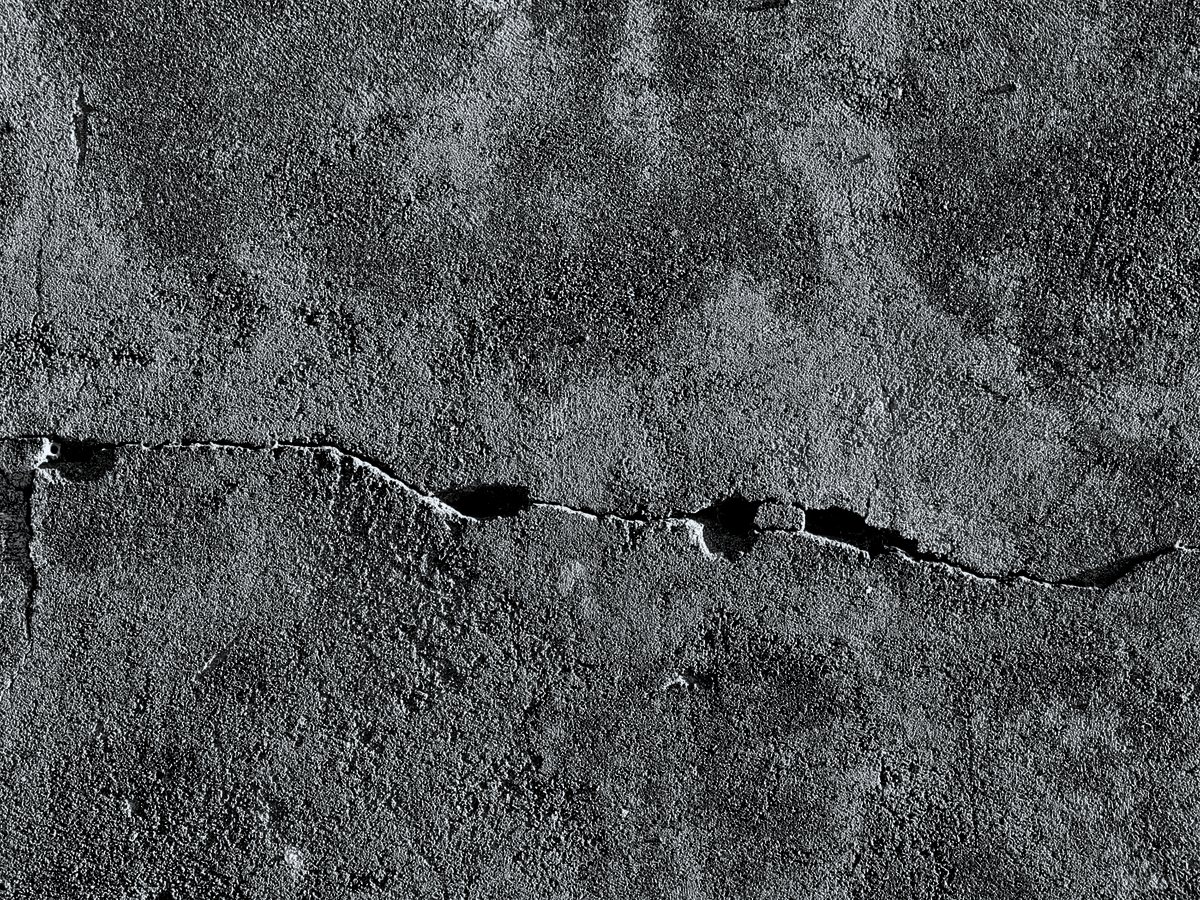
An open crack running the full width of an old concrete slab, with the edges spalled away on both sides.

02

The backfilled trench.

Whatever was dug out and put back is not the ground it used to be. A gas or water service trench across a drive keeps settling for years after the rest of the subgrade has stopped.

The slab bridges it until it does not. This is the crack homeowners describe as coming out of nowhere, and it is the easiest one to predict, because it runs exactly along a line somebody trenched. We ask where the services come in before we quote, and if nobody knows, we call for locates and find out.

What we cut

The trench gets compacted back in lifts rather than dozed in, then a joint sits over the line of it. Where we cannot get compaction deep enough, the slab gets thickened across the trench instead.

If it is skipped

A crack that follows the trench exactly, and it keeps moving, because the ground under it is still moving.

03

The middle of a wide pour.

A panel that is much longer than it is wide splits across its long axis. Panels want to be close to square.

Sixteen feet wide, cut only across at nine foot spacing, gives a panel about one and three quarters as long as it is wide, and it will find its own line down the middle. Joints down the centre turn those into panels of roughly eight by nine, and the slab stops looking for a way out. This is the joint most often left out of a cheap bid, because it is the one the customer does not know to ask for.

What we cut

A joint down the centreline the full length of the drive, so the widest panel on the job is close to square.

If it is skipped

A wandering crack down the middle of the drive, off centre, never straight, and permanent.

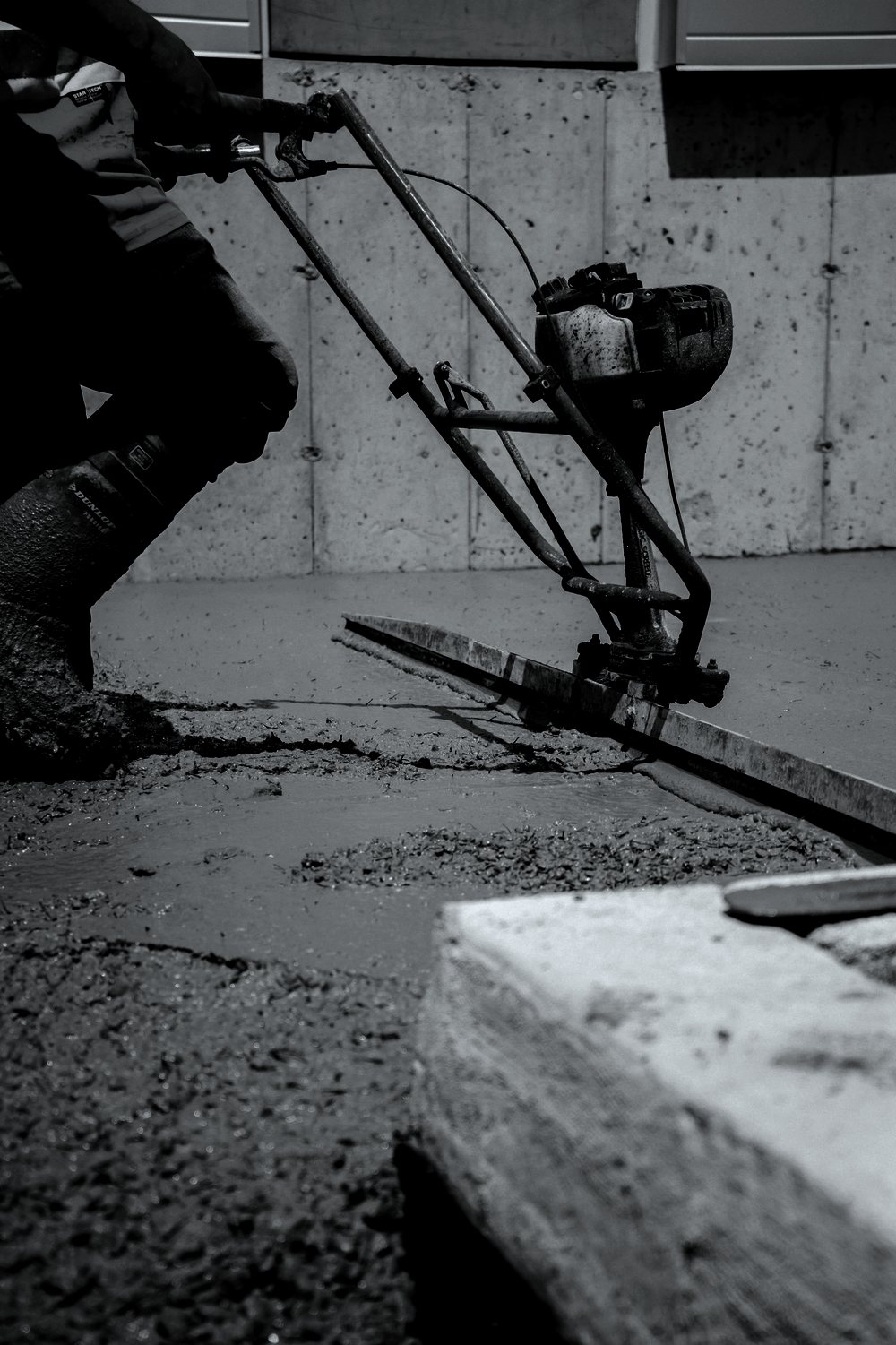
A worker standing in wet concrete over a rebar mat, boots buried past the ankle, pulling a screed rail across the pour. A worker running a walk behind power screed across a fresh slab beside a formed concrete wall.

04

The street end.

The public approach and the sidewalk are somebody else's concrete, moving on their own schedule. Bond your drive to them and the two spend the next twenty winters pushing at each other.

This is the joint that is not sawn. It goes in before the pour, full depth, with a compressible filler between the two slabs, so they are free to move independently. It is also the part of the drive everybody sees from the street, which is why a crumbled edge there makes an otherwise sound drive look finished.

What we set

A full depth isolation joint against the approach, the sidewalk, the garage slab and any porch or column the drive touches.

If it is skipped

Spalling and crumbling right at the street, and it cannot be patched back to looking right.

05

The downspout.

Nothing under a slab matters more than whether it stays dry. A downspout letting out at the edge of a drive washes the fines out of the base a bucket at a time.

Eventually there is a void, and a slab over a void is a bridge with nothing under it. Sump discharge does the same thing faster. We walk the roof line and the sump line before anything is formed, and if a downspout needs piping away from the slab we say so, because that pipe is cheaper than any part of the concrete and cheaper again than the mudjacking.

What we do

Locate every discharge point before forming, extend what needs extending, and grade the base so water leaves the slab rather than sitting under it.

If it is skipped

A dished, settled corner with a crack around it, three to eight years out.

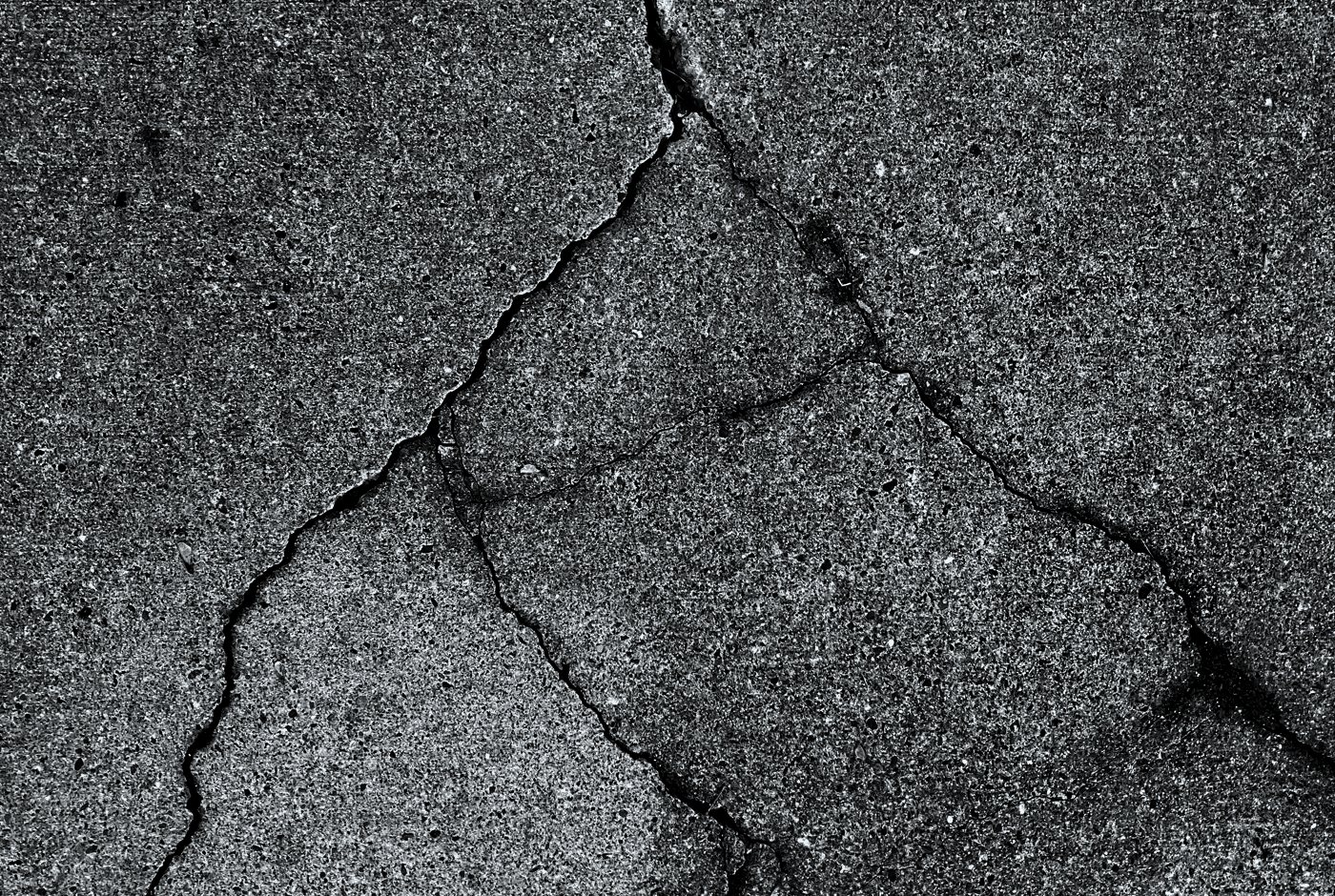
A branching network of fine cracks across a weathered driveway slab.

06

The edge a tire drops off.

The last few inches of a slab edge carry the heaviest load and have the least underneath them. A delivery truck or an RV that puts one wheel half on and half off breaks the edge, and the break runs inward.

This is not a jointing problem, it is a thickness and a base problem, and it is decided before the pour. Where we know a vehicle turns, backs, or parks against the edge, the slab gets deeper there and the compacted base is held out past the form so the edge is standing on something.

What we do

A thickened edge on the turning side, base carried past the form line, and five inches instead of four on any drive that takes a truck. We say which before we quote, not after.

If it is skipped

A broken off edge in a curve. The repair is cutting out that panel and replacing it.

The three numbers

Three numbers decide a driveway, and none of them are on a quote.

The thickness, joint spacing and panel shape Straightedge Flatwork pours to
WhatWhat we pourWhy that
Slab thicknessFour inches for cars. Five where a truck, a trailer or an RV parks or turns.The load is carried by thickness and by what is under it, in that order. One extra inch across a drive is a small part of the price and it is the part you cannot add later.
Joint spacingAbout two and a half feet of panel for every inch of slab. Four inches thick, so joints about every nine feet, each way.Past that spacing the slab makes its own joint. This is a rule of thumb the trade works to, not a law, and it tightens on a hot windy pour.
Panel shapeAs close to square as the drive allows. Never longer than about one and a half times its width.Long thin panels crack across the middle. This is the reason a sixteen foot drive gets a joint down the centre.
Cut depthRoughly a quarter of the way through the slab.A cut too shallow is a scratch and the crack goes around it. The joint has to be a real weak plane or it is decoration.
Cut timingThe same day, once the slab will carry the saw without ravelling.The window opens and closes on the weather. Come back tomorrow and the slab has already chosen its own lines.

These are working rules of thumb, written here in plain language on purpose. The published standards for jointing and for flatwork are the American Concrete Institute's, not ours, and we are not going to print a section number on a marketing page as though it were a warranty. Ask us for the joint plan and the mix ticket in writing before you sign anything, and hold us to those.

Four things we will not do.

  1. Pour on frozen ground, or on a base with standing water in it. The slab will be fine for a season and then it will not. If the forecast says wait, we say wait, and that is the whole conversation.
  2. Overlay a failed slab. A two inch topping over a broken drive is a two inch slab sitting on moving pieces. It cracks in the same places, usually by the second winter, and now there are two slabs to take out.
  3. Touch an approach in the public right of way without the permit in hand. Where your drive meets the street is the city's, not ours and not yours. Ask the City of Kansas City before anybody quotes you on it.
  4. Promise you a driveway that will not crack. It will crack. The only question anyone in this trade can honestly answer is whether it cracks in a line somebody drew or in a line nobody did.
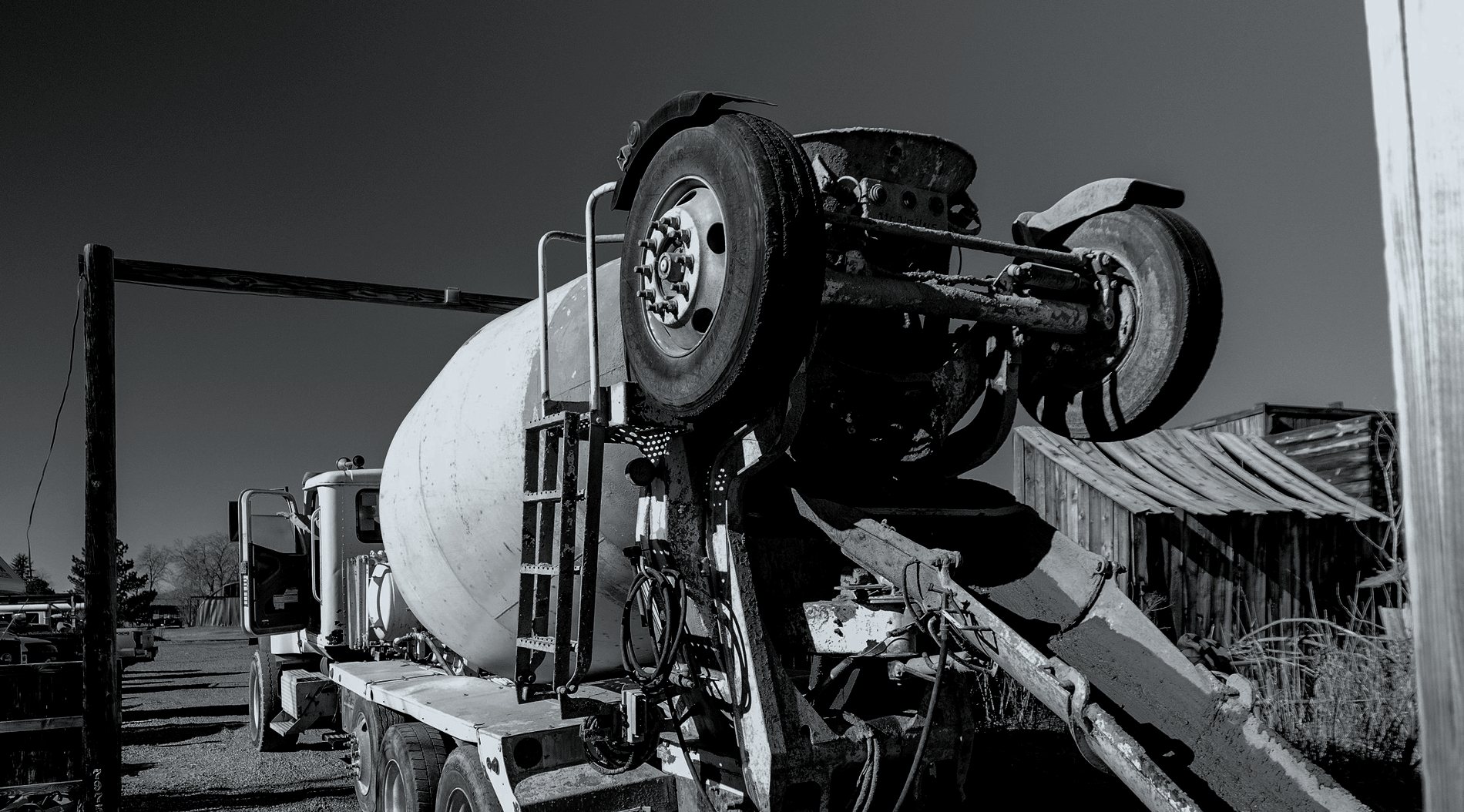
A ready mix truck parked on gravel with its chute swung out and hand tools laid on the ground beside it.

Before you call

A load is good for about ninety minutes.

Which is why concrete work is scheduled, not squeezed in. Tell us the drive, whether a truck ever parks on it, and where the water leaves the roof. We will walk it and mark the joints with you before anything is ordered.

Call (816) 555-0146

Yard
123 Main St
Kansas City, MO 64155
Hours
Monday to Friday, 7am to 5pm
Saturday by appointment
We pour in
Kansas City north of the river, Gladstone, Liberty, Smithville, Platte City, Parkville, Kearney
Season
Flatwork from March to November, weather permitting. Tear out and base work year round